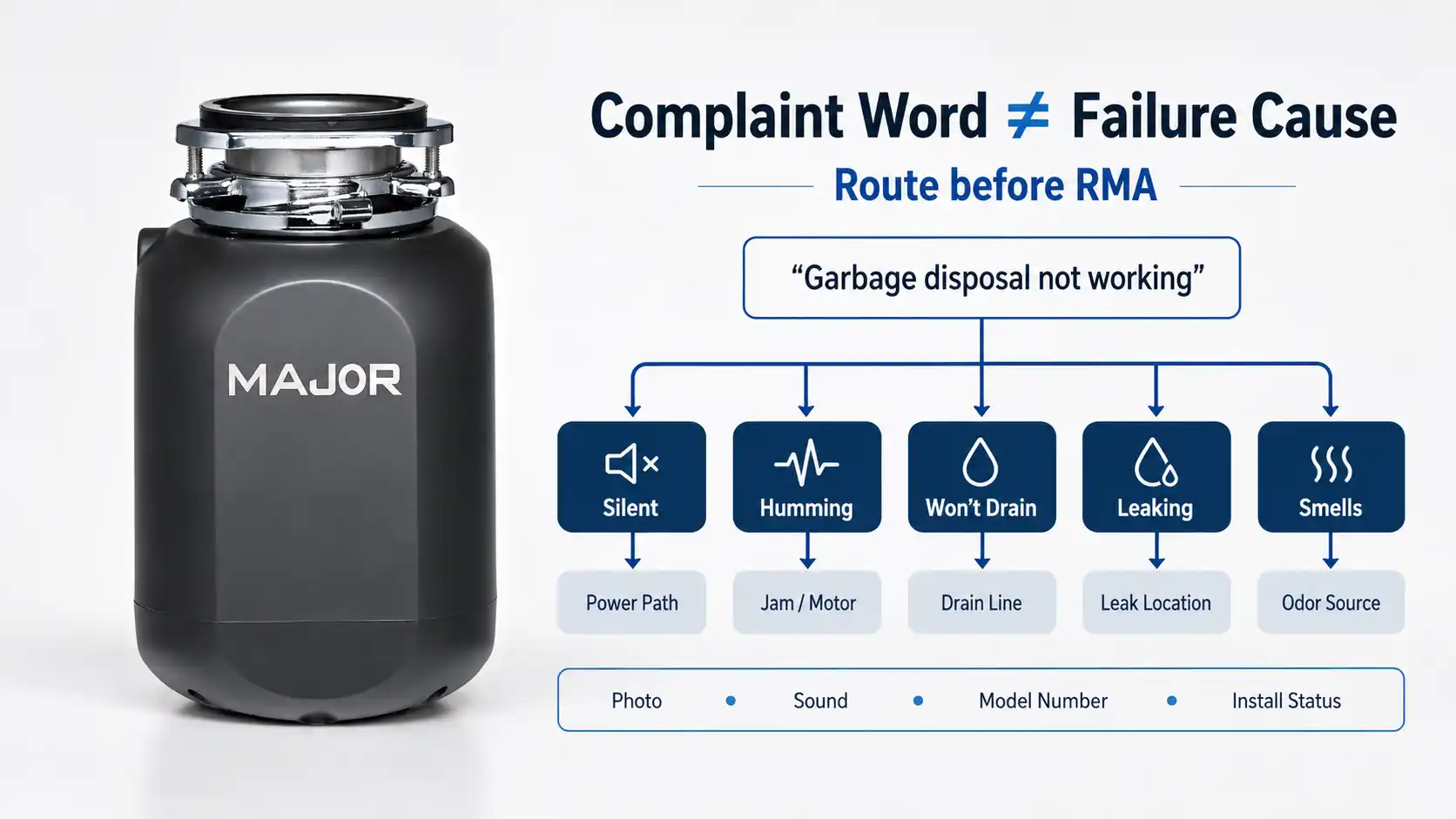
So the first question back is never which unit to send. It’s what the line actually points at. A fixed photo-and-sound intake, run before any RMA, costs less than coding the ticket off its wording.
The flowchart sorts a complaint by what the unit is doing. Below is each branch, then the one intake behind all of them.
Coding by the complaint word ships a good unit back
A homeowner who guesses wrong loses an afternoon. An importer who guesses wrong ships freight twice, eats a credit, and sends a replacement that fails the same way. The cause sat outside the unit. That second failure doesn’t reach the first invoice. It comes back weeks later as a new ticket.
The 2022 leak was install handling. A different Korean customer carried a smelling unit into the factory in May 2025. It turned out to be glue and food debris set hard against the chamber wall. The buyer had already swapped the drain pipe, the baffle, and one accessory after another chasing it.
When the unit is silent
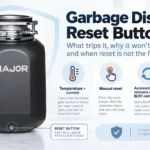
Start with the reset button, because it gets read backwards. Our units cut their own power when they overheat, then come back once they cool. The manual reset sits behind that as a backup. A reset button sitting flush — not popped — doesn’t mean the unit is dead. It can mean the unit already cooled and reset itself.
A silent unit is a power question first. Walk it in order: outlet, switch, reset, breaker or GFCI, then the wiring. The motor is the last stop, not the first. A unit that hums isn’t on this path at all — that’s a jam. A unit that ran, quit, and won’t restart is an overload cooling down.
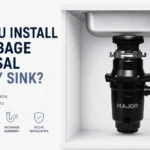
New installs have their own answer. A unit silent on day one points at the handoff, not the box. A loose wire nut, a neutral that didn’t land, a switched receptacle on the wrong leg. The full power walk is in Garbage Disposal Won’t Turn On.
When it hums but won’t turn
A hex wrench from below turns the motor shaft and the turntable plate. It does not reach the two swiveling impellers above that plate. Those are the parts a user is looking at when they say “the blades.” So a complaint that reads “it hums, but the blades turn fine” is pointing above the plate — where the wrench can’t go. The fix there is from the top, power off, pushing each impeller with a spoon handle.
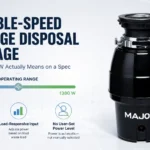
Then there’s the start. Some units hum and only catch once you nudge the rotor by hand. The cause is an AC starting circuit: a starting capacitor and a centrifugal switch. Our DC and BLDC series carry neither, so they can’t produce it. The AC series can, and sits in its own bucket. Before a humming ticket goes in the motor-failure pile, the SKU’s motor type settles half of it. The layer-by-layer version is in Garbage Disposal Humming But Not Spinning.
When it runs but the sink won’t drain
It runs. The motor turned — that part is answered. Whether the water then leaves is the discharge tube, the trap, and the line behind the wall. None of that is the unit.
Watch the discharge height. When the outlet sits level with the wall drain, the water has no fall and moves only while the disposal pushes it. It reads as a unit “helping it drain.” It’s a slope problem the unit is covering for. What the disposal controls is narrow: how fine it grinds, how hard it flushes, both ending at the outlet. Our BLDC flush boost lifts that force on the models built with it. It does nothing for a greased trap or a back-graded line. The branch-by-branch routing is in Garbage Disposal Not Draining.
When it leaks
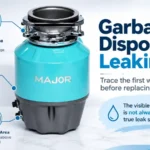
Back to the bench. The 2022 gasket cut didn’t show under a flashlight; it showed once the unit was apart. A leak complaint starts with where the water appears, not with a replacement.
At the discharge joint: a gasket or a loose connection. Up top by the flange: the mount or the flange seal. At a dishwasher inlet: a knockout handled wrong. From the housing seam or the body itself: the internal seal or a crack — and only that one sends the unit back.
The first three are parts, and they ship as parts. We add a one percent spare set on top of every bulk order, so a field failure doesn’t open a new RFQ. The leak-source breakdown, and how the old install fixes the replacement SKU, is in Garbage Disposal Repair or Replacement.
When it smells
A smell that survives a parts swap was never where the cleaning reached. Deodorizers clear the surfaces they touch and skip the ones they don’t — the baffle underside, the film down the line. Rotten food cleans off the unit. Sewer gas doesn’t: that’s a dry trap or a vent, and a new unit won’t touch it. The odor routing is in Garbage Disposal Smells Like Sewage.
One intake covers every one of these
Every branch ends in the same short request. Run it once, up front, before the ticket gets a category.
Sound: silent, humming, or ran-then-quit. The model number off the housing label. A photo of the part the complaint points at — the leak spot, the mounting, the baffle, the discharge. A short video if it only shows when reproduced, power isolated. New install, or long-running. What else shares the circuit, on a power complaint.
Those answers sort a ticket before anything ships. A leak resolves once you see where the water exits. A hum resolves once the sound and the motor type are both known. I can’t always tell which bucket a complaint belongs to from the first message — which is why the intake runs ahead of the RMA, not after.
None of this replaces a plumber on site. It’s what lets a supplier-side review tell a connection failure from a unit failure before freight goes either way.
Where the unit ends and the install begins
Part of what arrives as a disposal complaint resolves where the disposal doesn’t reach. That’s the reason to route first — an RMA can’t fix a problem in the trap or the wall line.
We build the chamber, the impeller plate, the outlet, the flush. We ship the units and the spares. We don’t lay the drain line, set the slope, wire the switch, or read a local sewer code. Our line grinds to 1.5–3 mm. Whether the sewer downstream carries that is a separate question, and it sits with the building’s plumbing and the local authority. Where the ground output goes after the outlet is its own topic, in How Does a Waste Disposal Unit Work.
The boundary earns its keep. It marks which complaints a replacement can’t fix, and which spares to stock so the rest get solved at the sink. For the units and how they’re set up by market, start with the DC-motor food waste disposer catalog. A model number and the intake answers will reach our team.
FAQ
Why is my garbage disposal not working?
“Not working” is four tickets that go four ways. Start with sound: dead silent points at power, humming points at a jam, ran-then-quit points at an overload cooling down. If it runs and the sink won’t clear, the drain line is the suspect, not the motor.
Is it the disposal or the plumbing?
If it runs, the stuck part is past the outlet. So the line, not the unit.
Should this go back as a warranty return?
Only after the intake points at the unit and nothing else. A return fits when the housing has cracked, or the seal between the motor section and the grind chamber has failed, or a jam has been walked through the hex-key and reset checks and still won’t run. It’s the wrong call on a leak that turns out to be a discharge gasket, a silent unit that turns out to be a tripped GFCI, or a smell that turns out to be the baffle. The wrong call costs the unit, the freight, and a second complaint when the replacement meets the same install.
Is a garburator different from a garbage disposal here?
Same machine, Canadian word. The routing doesn’t change.
“It’s cheap, just replace it” — does that hold for an importer?
For a homeowner at a hardware store, sometimes. By the container, a replace-first reflex turns a five-minute gasket question into freight both ways, a credit, and spare stock that never got used. The replace decision earns its place after the intake, not before.
Sources
- Reset and no-power routing: InSinkErator — Resetting a Garbage Disposal, Lowe’s — Garbage Disposal Not Working? Tips and Tricks to Fix It.
- Jam and humming routing: InSinkErator — Fixing a Jammed Garbage Disposal, Home Depot — How to Fix a Garbage Disposal, Roto-Rooter — Un-Jam Your Garbage Disposal Like a Pro.
- Drain and clog routing: PlumbingSupply.com — How to Troubleshoot Your Garbage Disposal, Home Depot — How to Unclog a Garbage Disposal.
- Leak-location routing: The Spruce — How to Fix a Leaking Garbage Disposal, Moen Solutions — Leak Underneath: New Garbage Disposal.
- Odor routing: InSinkErator — There’s an Odor Coming From Garbage Disposal, Oatey — Sewer Gas Odor in Your House and What to Do About It.
- Dishwasher drain path: Whirlpool — What Is a Dishwasher Air Gap?, Better Homes & Gardens — Why Is My Dishwasher Not Draining?.
- Ground output and sewer route: KWR — The Impact of Food Waste Disposers on the Indoor Sewer System, CWWA — Residential Food Waste Grinders Issues Analysis Paper.
Major-specific product facts, the automatic recovery and manual reset behavior, AC / DC / BLDC motor-path distinctions, BLDC flush boost on selected models, spare-parts policy, one percent spare set practice, 1.5–3 mm grind-output reference, and the May 2022 and May 2025 post-sale cases are based on Wanjiamei Technology Development Co., Ltd. (Major) product documentation and service records.